Instructional Coaching

Instructional Coaching

Friday, January 22, 2016

Place Value Practice Apps


Are you looking for exciting apps that your students can use to practice place value?  Slide 100 or Slide 1000 are just what you have been looking for!!!

Here are some short videos on these 2 engaging apps.


If you are interested in either of these apps, please let me know.  We can push the app to your students' iPads.

Wednesday, December 16, 2015

Thinking of the NEW YEAR!


As the New Year approaches, I want to take this time to remind you all that I AM HERE FOR YOU!  I am your support system, your professional development, your resource finder, your tech support, your data collector, and so much more.  Please know that you do not have to wait for a PD class/conference to learn and explore something new or figure out ways to enhance what you are already doing.  I am available to support you NOW!  My goal for the New Year is to get into more classrooms whether it be to plan with a teacher, co-teach, model lessons, gather resources, provide training with technology or instructional practices, etc. Also, I know how busy you all are and that it can be difficult to attend some of the after school training classes.  If there is a specific topic/app/site/instructional practice that you would like to learn about, please share these with me.  I am planning on creating short videos on these topics that will allow you to learn about these concepts when you have the time - maybe while you are sitting on your couch at home with a warm (or cold) drink in hand! Please feel free to contact me at anytime for help and support!  You can just email me or fill out the coaching request form.

What is an Instructional Coach?
My main purpose as an instructional coach is to support and assist staff members to reach their goals for student learning.  As an instructional coach, I will provide individual or small group on-site differentiated professional development.

Goals as an Instructional Coach: *Be your partner *Meet teachers where they are and take them to the next step *Be Goal-oriented (student-centered) *ULTIMATE GOAL - Impact Student Learning

How Can I Support You?
*Focused discussions on using proven research-based instructional methods
*Data discussions and differentiated planning
*Modeling (demonstration lessons)
*Co-teaching (collaborative lessons)
*Observing & provide feedback (focused classroom visits)
*Videotaping , discussion, and feedback (For the BRAVE soul)


Informal Coaching:
I am also available for informal coaching support, if you are interested.  These will be one-time or short-term planning sessions.  This type of coaching tends to be more teacher-centered.

Formal Coaching Cycle: *Work together to look at student work/data & choose a focus/goal based on what would benefit your students most *Plan lessons once a week (30-45 min.) *Planning sessions will include analyzing assessments or student work & discussing best instructional practices *Model or co-teach   *Can last from 4-6 weeks (or longer, if needed)
*Student-centered


Thursday, August 27, 2015

Welcome Back!

Image result for instructional coach

If you need any support these first couple weeks, please don't hesitate to ask!

Tuesday, February 24, 2015

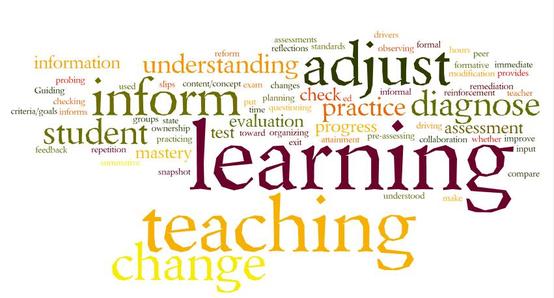
Tuesday Teaching Tips - Formative Assessments

Formative Assessments
How will we know they are learning?

Formative vs. Summative
Formative assessments are assessments to inform instruction (for learning), while summative assessments are assessments of learning.

Why should we use Formative Assessments?
Only by knowing where each student is on their learning path can we truly differentiate their instruction.

Options of Formative Assessment:
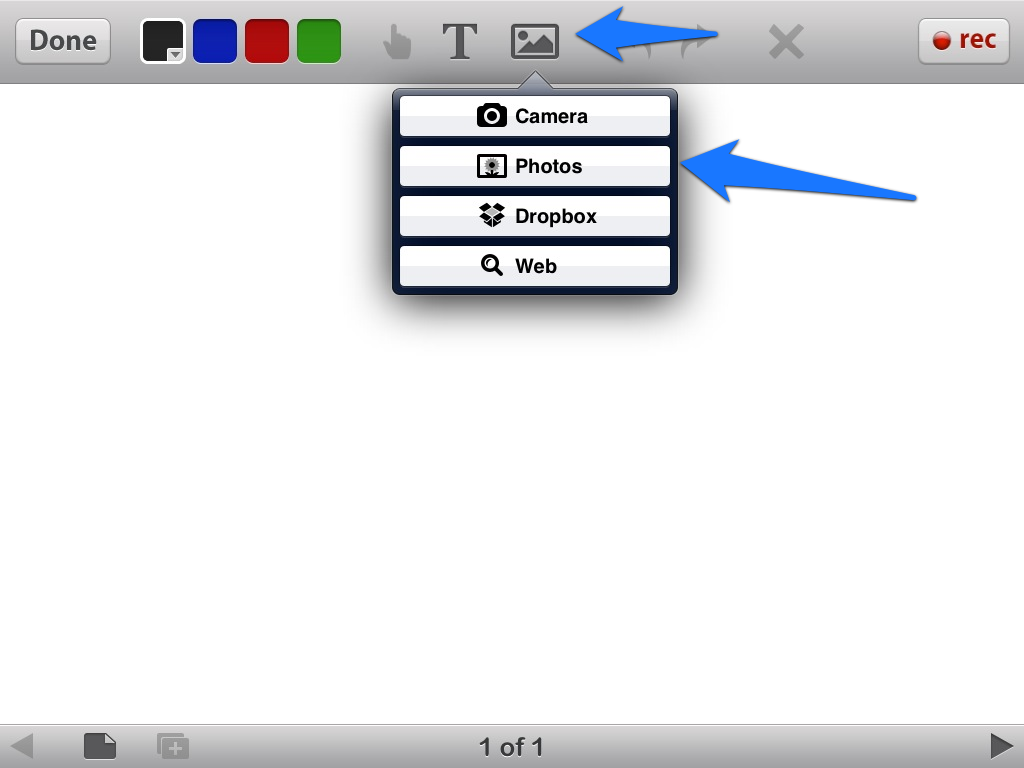
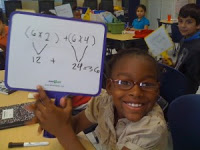
*Individual Dry-Erase Boards/Digital Whiteboards (on iPads)
   
                   Digital Whiteboards

    
Educreations


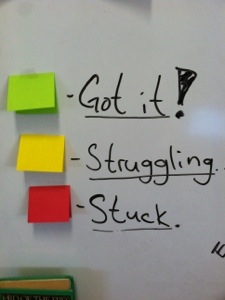
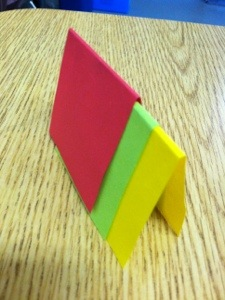
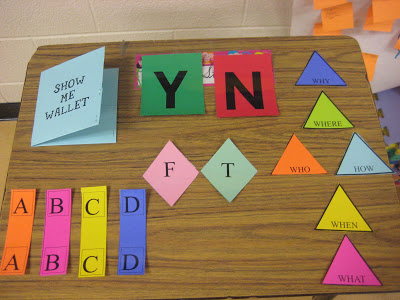
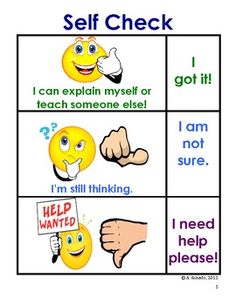
*Self-Assessment (Ex. Stoplight/Show Me Wallet)
     

*Quick Writes
Give students two or three minutes to reflect on and summarize their learning.
*Why am I wrong? Give an incorrect answer or misconception. Students write why the answer is wrong.
*Index Card Responses (Respond to question about the lesson)
*Headline - write a headline to describe a key understanding from class.
*Who, What, Where, When, Why, & How? - Write about what they learned in the lesson.
*ABC Summaries - Give each child a letter (skip the difficult letters).  Students select a word starting with that letter that is related to the lesson.

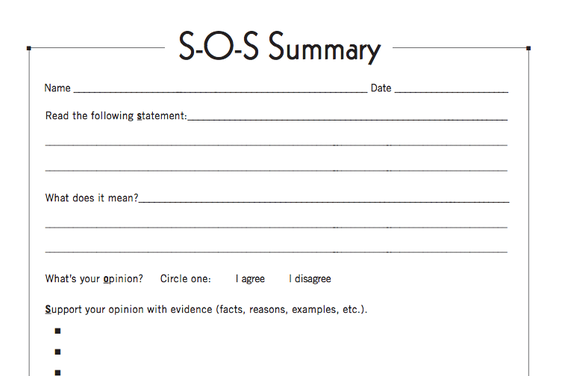
*S-O-S Summary

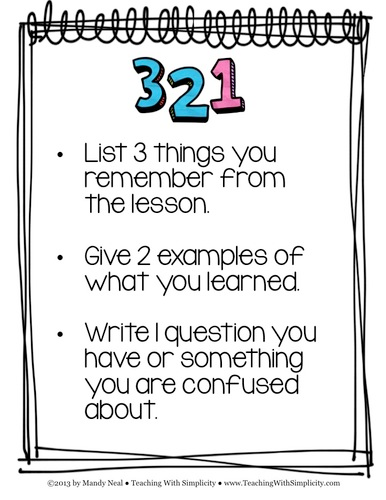
*3-2-1 Summarizer

*Exit/Admit slips
  

Here is a great video using an Admit Slip Strategy called - My Favorite No

*Observation
*Anecdotal Notes (“+” or “-”)  Did they understand or not?  What additional support or differentiation do they need?
*Running Records
*Checklists/Rubrics
*Look and Listen (Eavesdropping on groups)

*Hand Signals
Ask students to display a designated hand signal to indicate their understanding of a specific concept, principle or process.
*Fist-to-Five
*Thumbs Up
*1-2-3 Show me (1 = know very little, 2 understand well, 3 = I could teach it to someone else)
Hint:  Keep fingers or thumb in front of chest.
*Pop-Quizzes (not graded)
Quizzes assess students for factual information, concepts and discrete skill. There is usually a single best answer. Some quiz examples are:
*Multiple Choice
*True/False
*Short Answer
*Matching
*Short/Extended Response

Formative Assessments Using Technology:
Click on the Assessment for video tutorials & suggested ideas.

Monday, January 26, 2015

Tuesday Teaching Tips - Weaving Digital Imagery into Everyday Teaching

Why bother weaving digital imagery into everyday teaching....
*All students matter! We can differentiate by using digital imagery.
*It is a requirement in standards.
*It encourages critical and problem solving skills.

Examples of Activities:

#1 Compare and Contrast
*Give students two images and ask them to tell you how the two images are the same and different.


*Give children a Venn diagram with pictures, students fill in with words.
*Give children a Venn diagram with words, students fill in with pictures.
Screen Shot 2015-01-26 at 3.22.33 PM

#2 Choose an Image
*Give students 2 images.  They need to complete the set with a third image.
  

*Give students 4 images.  They need to give one word to represent all 4 pictures.


#3 Choose an image that explains/describes/expresses _____
*Students choose 3 images to explain/describe/express a specific topic or idea.
Ex. Students choose 3 images that express why people should be encouraged to recycle.  Challenge - Students are not allowed to use recycle or recycling in their image search.

Great safe and FREE site for finding images:  www.pics4learning.com


Friday, January 23, 2015

Top Ten


Top Ten Reasons to Sign Up For Coaching

1. Together, we can look at student work and decide your next steps for instruction.


2.  We can plan together.


3.  I can help provide valuable resources and materials for your lessons.


4.  I can observe your teaching and offer helpful feedback to help you go from GREAT to EXTRAORDINARY!

5.  I can observe students in your room and offer helpful feedback on what they are doing well, and we can focus on their needs.


6.  We can co-teach.


7.  I can model lessons.


8.  Two heads are always better than one!


9.  It’s fun!

10.  It’s FREE!!


Monday, January 19, 2015

Tuesday Teaching Tips - Formal Coaching Cycle

Formal Coaching Cycle

My goal for the rest of the school year is to find a couple teachers that are interested in a formal coaching cycle.  This would be a 4-6 week cycle focused on improving instruction in one area.  We would meet weekly to plan together.  Co-teaching, modeling, observation, video-taping are all options during this coaching cycle.

What will our initial coaching meeting look like and include?

Two Purposes of Initial Coaching Meeting:
1.  Identify focus area and goal for upcoming coaching cycle.
2.  Review coaching cycle logistics.

Part 1 - Coaching Focus:
1.  What are you thinking you would like to focus on during this coaching cycle?
2.  Discussion about students.
*How would you describe your students as learners in this focus area?
*What are your hopes for students in this area?
*What standards will you focus on?  Are there specific standards that seem tricky for your students?
*Pre-assessment 

Part 2 - Strategies for Coaching and Collaboration:
1.  Our coaching cycle will last 4-6 weeks.  We will meet weekly to plan.  When is the best time to meet for 30-45 minutes each week?
2.  For classroom visits, I plan on coming in 2 times per week with a short debrief after my visit.  This will allow you to reflect on your instruction and time for me to give timely feedback.  
3.  We will use Google Docs to track our progress and record our work.

Part 3 - Meeting the Teacher's Needs:
1.  Do you have any questions or concerns about the coaching cycle?
2.  Is there anything you want me to be sure to do as your coach or is there anything you would like me to know about you or your processing style?

Please let me know if you are interested in a formal coaching cycle.  I would love to work with you and your students!!

Here is a sample Initial Coaching Meeting:

Monday, January 12, 2015

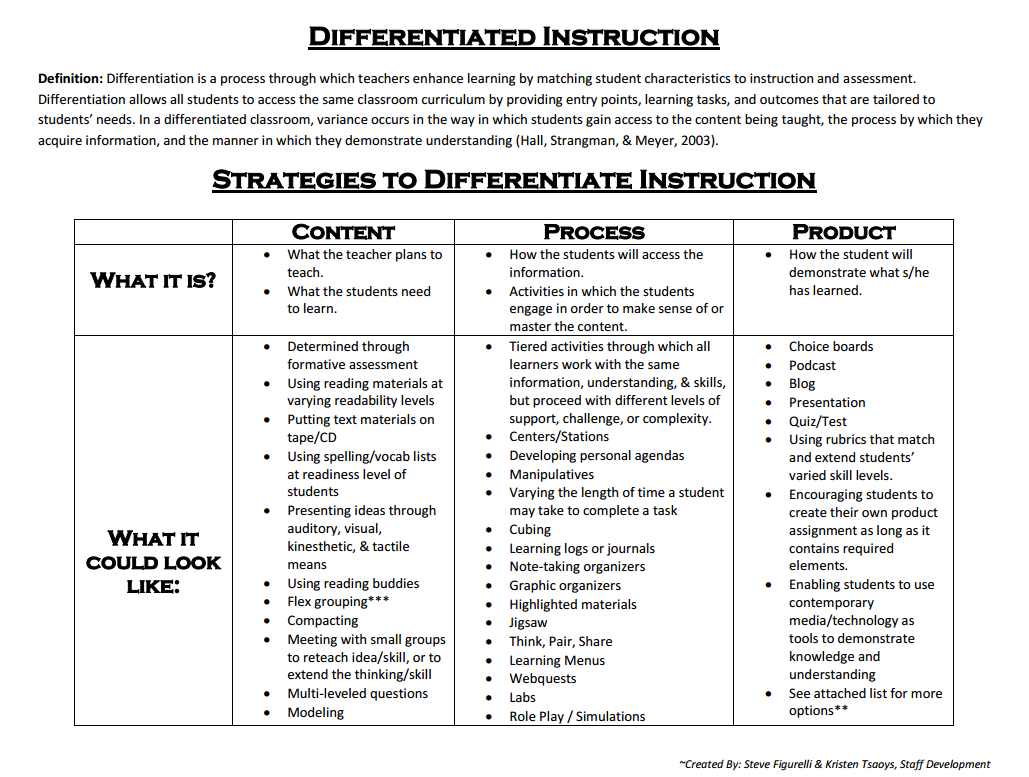
Tuesday Teaching Tip - Differentiating Instruction


Differentiated Instruction:
Here is a great link with many ideas.


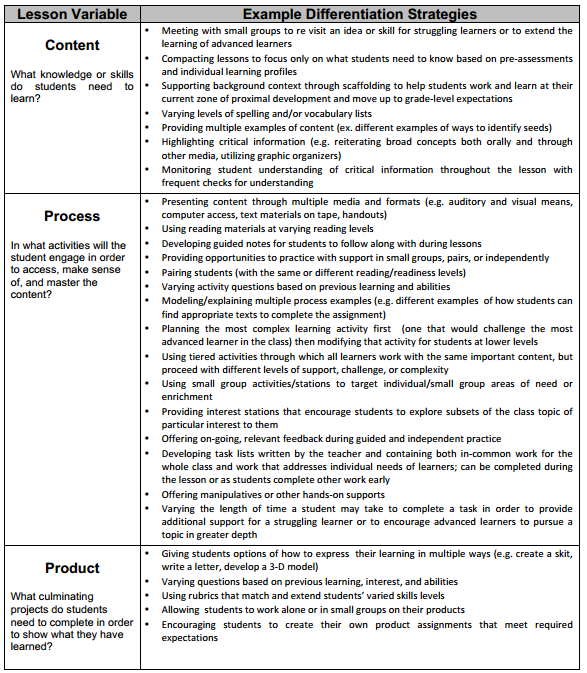
Differentiation strategies: content, process and product
The following are examples of differentiation strategies, defined by lesson variable. These strategies are adapted from work by Carol Ann Tomlinson. Consider using these strategies when planning lessons, selecting instructional strategies and determining topics for professional development, and exploring new differentiation strategies.


Differentiating Product Assignments for Advanced Learners
  • Have students study key issues across time periods, disciplines or cultures
  • Provide advanced-level resources
  • Encourage students to use primary sources and original documents
  • Allow students to work on long-term, ongoing assignments when they compact out of class work
  • Allow students work with professional mentors

Saturday, November 29, 2014

Tuesday Teaching Tips - Preparing for PARCC

Computer-Based Assessment:  To prepare students for the many different types of questions that could be on the PARCC test, check out this site.  On this site, there are many samples of innovative questions from less complex to more complex.  

Computer-Based Assessment: "Intermediate Constraint" Questions and Tasks for Technology Platforms


10 Key Online Testing Terms

Stems for use in writing PARCC-like items and text-dependent questions

PARCC FAQ

Here are some sites with sample Math & ELA questions:
*CCSS Aligned Practice Tests & Sample Questions for Grades 3-8
*Elementary Research Models
*PARCC Sample Questions
*ELA Practice Passages & Questions


Math Prototype Tasks
The Mathematics Common Core Toolbox site offers examples of the types of innovative assessment tasks that reflect the direction of the PARCC summative assessments.
Elementary School Tasks
Middle School Tasks

PARCC-like Items
The below PARCC-like items have been developed by Arizona teachers, coaches and administrators. (The teacher version includes rationale, standards assessed, and scoring rubric, along with the test questions)
English/Language Arts
Math

Sample Items and Think-Throughs
The below Arizona sample assessment item and think-through sets were designed to help prepare students for the PARCC assessments.
Grades 3 - 5
Grades 6 - 8

Wednesday, November 5, 2014

Tuesday Teaching Tip - Child/Teacher Friendly "I Can" statements


As we write ELA curriculum, I find it helpful to look at "I can..." statements to guarantee that we are covering all the required common core standards.  I found this wonderful website that has many great resources called "The Curriculum Corner."  There are many helpful documents organized by grade level.  Find some time and check out your grade level:

The Curriculum Corner (Click on the links below)

I Can... Statements by grade level

Common Core Checklists by grade level


Tuesday, October 28, 2014

Tuesday Teaching Tips - Similarities and Differences

Instructional Strategy Focus

Similarities and Differences (Marzano)

Teachers engage students in activities that help them examine similarities and differences among ideas, issues, or events by engaging in mental processes such as:
*Compare & Contrast
*Classify
*Create metaphors
*Analogies

Sample Activities and Teaching Ideas:
*QAR
*Frayer Model (vocabulary)
*Knowledge Rating Chart
*Concept Circle
*Word Sort
*Semantic Feature Analysis
*Probable Passage
*Give One Get One
*Tea Party
*Anticipation Guide
*Metaphors and Similes
*Analogies
*Sentence Stem Comparison
*Venn Diagrams
*Double-Bubble Diagram
*Comparison Matrix
*Classification Chart
*Visual Analogies

Helpful Documents:
*Provide Students with tasks that require them to examine similarities and differences.  SAMPLES

*Similarities and Differences CHEAT SHEET

Tuesday, October 14, 2014

Tuesday Teaching Tip - Mental Math Stategies

Students may not have all facts memorized, but they should have strategies to solve these problems.

Here are some examples of mental-math strategies for addition:

1.  Counting On - Students start with a number and count on 1, 2, 3. For example, if the question is 5 + 2, students count 5, 6, 7. Note: This strategy is only useful for adding 1, 2, or 3.

2.  Make a Ten - Students make combinations that equal 10. Then they extend to make combinations that are multiples of 10. Examples: 6 + 4 = 10 extends to 76 + 4 = 80. This can then be extended to 10 + 4 = 14 or 50 + 8 = 58.

3.  Use Doubles - The first fact combinations students often learn are doubles. Examples:
2 + 2 =
3 + 3 =
8 + 8 =

4.  Think +10 for +9 -  Those 9s are such difficult facts!  But, adding 10 to a number is easy.  So, when I see 9 + 6, I can think 10 + 6 and then just subtract 1.

Here are some examples of mental-math strategies for subtraction:

1.  Counting Back - Students start with a number and count backwards. If the question is 5 – 2, students count 5, 4, 3. Note: This strategy is only useful for subtracting 1, 2, or 3.

2.  Counting Up - Students start with a number being subtracted and count up to the number from which it is being subtracted. For example, for the question 9 – 7, students can count 8, 9.

3.  Using Doubles - For the question 13 – 6 = ?, students think addition using doubles. For example, 6 + 6 = 12, then add-on 1 to make 13, so 6 + 1 = 7.

4.  Make Ten and Then Some - Given a subtraction question such as 14 – 8 = ?, students start with the part (8), add-on to make 10 (i.e., 8 + 2), then add-on from 10 to make 14 (10 + 4). Then the students add the numbers they added-on to make 14 (4 + 2 = 6).

Saturday, October 4, 2014

Tuesday Teaching Tips - Informational Text

Reading Informational Text Tips

1.  Use Graphic organizers - Using graphic organizers throughout lessons helps students improve their comprehension and good readers use graphic organizers to summarize texts.

Here are some sample organizers:


2.  Share Mentor Texts for each Structure - Read the text aloud and show students how to fill in the text structure graphic organizer.  The mentor texts become models you can refer to throughout the rest of the school year.

Here are some sample Mentor Texts & their Text Structure:


Description
Animals Nobody Loves by Seymour Simon
Students will remember the facts about each of the creatures on the least favored list!
Sequence
Liberty Rising by Pegi Deitz Shea
The wonderful illustrations show the sequence of how the great Statue of Liberty came about.
Problem/Solution
Jimmy the Joey: The True Story of an Amazing Koala Rescue by Debora Lee Rose
A little orphaned koala is rescued and learns to survive on his own.  Students are introduced to koala endangerment organizations for letter writing and project-based learning!
Cause/ Effect
Electrical Wizard by Elizabeth Rusch
Whether Nikola Tesla was observing the sparks from petting his cat or studying the power of Niagara Falls, he lived in an inventor’s world of cause and effect!
Compare/Contrast
Lincoln and Douglass by Nikki Giovanni
In spite of their differences, these two friends had much in common! What a great compare/contrast story.

3.  Pay Attention to Text Structures Throughout Reading - Encourage and guide students to use text structure to comprehend informational text.  Before reading, predict which text structure the author would use.  During reading, fill in the text structure organizer.  After reading, summarize the text using the graphic organizer.

Great 4th Grade Video - Ever Wondered Who Invented Pizza?

4.  Conduct Frequent Think-Alouds - "I think the author wrote this (article, book, chapter, section) by using (one of the 5 structures) because I see (clues, clue words, etc)."  When the class is reading informational text, pause to consider which structure fits the text.

5.  Assign a Text Structure to Groups or Pairs - Have students work in teams to hunt for text structures to identify in TFK, newspapers, online articles, trade books, and content textbooks.

Literacy Survival Tips - Informational Text

Tips for Reading Informational Text